- Home
- Blog
- Buying Guide
- Common Mistakes to Avoid When Buying Property in Dubai


Common Mistakes to Avoid When Buying Property in Dubai
Dubai’s property market attracts buyers from around the world with its modern skyline, strong infrastructure, and wide range of investment options. From ready homes to off-plan projects and high-end residences, the city offers opportunities for all. At the same time, every purchase involves legal steps, construction timelines, ongoing costs, and market conditions that should be clearly understood. Taking the time to learn how the system works helps buyers avoid the pitfalls of buying property in Dubai.
Navigating the Legal Side of Property Ownership in Dubai
 Foreign buyers in Dubai sometimes expect the ownership process to work exactly like it does in their home country. Dubai, however, has its own clear legal structure. Non-UAE nationals can purchase property in approved freehold zones, where they receive full ownership rights. However, there is a legal checklist for buying property in Dubai as a foreigner.
In freehold zones, buyers can own the property fully. Outside those zones, ownership may be limited to a long-term lease. This system is transparent and well-regulated. To avoid legal complications, confirm that the property is in a designated freehold area before paying any deposit. With the right guidance, the legal risks of buying property in Dubai are fairly easy to manage.
The Sales and Purchase Agreement (SPA) plays an important role in every transaction. It outlines payment terms, timelines, and responsibilities on both sides. In off-plan projects, developers may include clauses about construction timelines or minor size variations. These terms are standard practice in Dubai’s market. To avoid problems, review the SPA carefully and clarify any unclear sections before signing.
Power of Attorney has made remote buying far more accessible. Investors who cannot travel to Dubai can still complete transactions efficiently. The important part is structuring the Power of Attorney correctly. A limited, property-specific document provides clarity and control. If you want to make a safe transaction, you can always use our TeleProperty ® system! Overseas buyers can purchase property without unnecessary stress with the right real estate agency.
Inheritance planning is often overlooked during the excitement of a purchase. Dubai law allows non-Muslim property owners to register wills that determine how their assets are distributed. Taking this step ensures that the property passes according to the owner’s wishes rather than default legal rules. Addressing inheritance early keeps arrangements of property ownership in Dubai clear and reduces complications for family members in the future.
Understanding Off-Plan Projects & Construction Timelines in Dubai
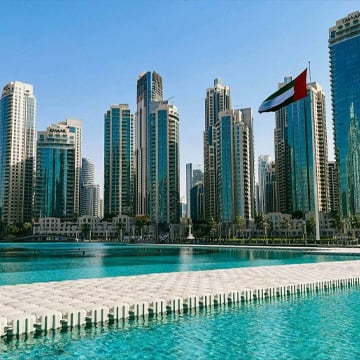 Project delays are normal in a fast-growing market like Dubai. The city continues to launch large residential projects, and timelines can shift as construction progresses. Handover dates sometimes move due to contractor workload or supply issues. Regulations clearly define grace periods and outline possible compensation in certain cases. To reduce off-plan risks, review the delivery timeline in your contract carefully and allow flexibility in your planning. With these, you can manage off-plan property risks in Dubai without major stress.
The developer behind a project makes a real difference. Well-known companies such as Emaar, Nakheel, and Dubai Holding have delivered major projects across Dubai over many years. Newer developers also offer competitive prices and modern concepts, but their history may be shorter. To understand the project’s reliability, check past completions, confirm land ownership, and verify approvals.
Escrow Protection for Off-Plan Property in Dubai
Escrow accounts provide structure and financial oversight in purchases of off-plan properties in Dubai. By law, buyer payments must go into a project-specific escrow account monitored by the authorities. Funds are released step by step as construction steps are completed and verified. This process keeps payments linked to actual progress on site. While escrow does not remove all risks of buying property in Dubai for foreigners, it does create a clear system that supports accountability throughout the project.
As handover approaches, quality becomes the main focus. Faster construction timelines can sometimes result in minor finishing issues. Dubai law offers protection through a 10-year structural warranty and shorter coverage for mechanical and electrical systems. A professional property check done before accepting the keys helps document any issues that need correction. Most developers address the listed defects within set timeframes once they are formally recorded.
Hidden Costs of Buying Property in Dubai: Taxes, Fees & Ongoing Charges
 When buying property in Dubai, the purchase price is only part of the total cost. Buyers should also consider:
- Dubai Land Department (DLD) property transfer fees in Dubai
- Property registration and trustee office fees
- Real estate agent commissions
- Mortgage registration fees
- Bank arrangement and valuation fees
- Service charges (annual maintenance fees)
- Community management fees
- District cooling charges
- Utility connection deposits (DEWA)
- Property insurance
- Life insurance (for mortgaged properties)
- Dubai Municipality housing fee
- Property management fees
- Tenant-finding and lease renewal fees
- Maintenance coordination charges
- Vacancy periods impacting rental income
Making Informed Decisions in Dubai’s Luxury Market
It is very easy to avoid Dubai luxury real estate pitfalls, but there are important parts that buyers should know. Dubai’s luxury property market can move faster than the mid-market. Prices of properties for sale in Dubai, especially in high-end areas, often rise quickly during strong periods, but they can also cool down when global conditions shift. Because many buyers in this segment are international, the market is more exposed to changes in global wealth and investor confidence. That does not make it unstable, but it does mean buyers should pay attention to timing and avoid assuming that past growth will automatically continue.
At the same time, new luxury developments continue to enter the market. While some established areas remain limited in supply, new waterfront projects and branded residences are expanding the number of high-end units available. When several similar properties launch within the same price range, competition increases. In these cases, details matter: layout, view, privacy, and developer track record can influence long-term value. To avoid overpaying during a strong launch cycle, compare similar projects carefully before committing.
 Rental expectations in the luxury segment also require balance. Marketing materials may highlight attractive projected returns, especially for short-term rental strategies. In reality, higher purchase prices often mean rental yields are moderate in percentage terms. Occupancy rates, seasonality, and operating costs all affect final returns. To evaluate rental potential accurately, review actual rental performance in the building and surrounding area instead of relying only on projections.
Liquidity works differently at the top end of the market. A mid-market apartment may attract a wide group of buyers, but a luxury villa or penthouse targets a smaller audience. As a result, resale timelines can be longer, especially if pricing does not reflect current conditions. To sell faster, price your property according to current market feedback rather than above comparable sales.
Finally, the profile of luxury buyers continues to shift. Demand may increase from certain regions during one period and slow from others in the next. Preferences also change: some buyers prioritize branded residences, others focus on privacy or turnkey properties. Keeping track of these patterns is not always simple, which is why many investors rely on up-to-date market insight when making decisions. Our professional team at TEKCE Real Estate can provide you with personalized market insights.
With decades of experience, a strong reputation for reliability, and a comprehensive one-stop service model, TEKCE Real Estate ensures a seamless and secure property investment process across multiple countries and languages.
FAQ
Is the real estate market in Dubai regulated by the government?Yes. The Dubai real estate market is strictly regulated by DLD (Dubai Land Department) and RERA. Standard contracts approved by the authorities are used in real estate transactions. Projects, developers, sales agreements (SPA), escrow accounts, and payment flows are subject to government records and approvals. Sales made outside this regulated system are not legally valid.
Is there a risk of fraud when buying property in Dubai?As in any country, there is a risk of fraud when buying property in Dubai. The Dubai real estate market is strictly regulated by the Dubai Land Department (DLD) and RERA. However, if the buying process is not handled well, the risk can still remain. This risk often happens when key details are not checked properly. These include the title deed status, the seller's authority, and payment through official channels. For foreign buyers, common risks include working with unlicensed agents. They also include not checking developer and project records for off-plan deals. Another risk is paying outside DLD-approved escrow accounts.
TEKCE eliminates this risk in Dubai by verifying the property, developer, and agent details through official DLD and RERA systems before the purchase. TEKCE also manages all contract and payment processes within the legal framework and with written procedures. This allows the buyer to follow every step of the process in a transparent and secure way.
How to check if a real estate company is legit in Dubai?In Dubai, you can check whether a real estate consultant is authorized and reliable through their RERA license. To work as a real estate consultant in Dubai, they must have an individual broker license issued by RERA. This license is registered in Dubai Land Department (DLD) records. The consultant's license can be verified through the Dubai REST application provided by Dubai Land Department. You can search by the consultant's name or broker number. The system shows whether the license is valid and which real estate company the consultant works for. Authorized consultants must also carry a RERA broker card with their photo and license number. In short, the reliability of a consultant in Dubai is not based on personal claims. It is based on having an active license in DLD and RERA records. You should not work with anyone whose license cannot be verified through the official systems.
How to verify if a real estate companies is RERA license in Dubai?The RERA license of real estate companies and consultants in Dubai can be checked through the official system of Dubai Land Department (DLD). You can search by the real estate consultant's name, broker number, or company details. The system shows whether the license is valid, which company the consultant works for, and their authorization status. Anyone who wants to carry out real estate activities in Dubai must be RERA-licensed. For this reason, Dubai REST and DLD records are the most reliable official sources for license verification. You can check the license status of real estate companies and consultants through the Dubai REST application.
Why is the same property in Dubai listed at different prices on different platforms?The same property in Dubai may be listed at different prices on different platforms because listings do not always reflect the current inventory, and old launch prices may remain online. The Dubai market moves very fast. Depending on stock availability, the lowest price in a project can change several times in the same day. Many real estate agents do not have enough staff to update these changes in their listings immediately. For resale properties, an approved advertising permit number is required to publish a listing. For this reason, there is usually less information pollution in the resale market.
Can you encounter fake property listings in Dubai?Yes, you can come across fake or misleading property listings in Dubai. The market is regulated by Dubai Land Department (DLD) and RERA (Real Estate Regulatory Agency). To publish a real estate listing in Dubai, an advertising permit must be obtained through DLD's Trakheesi system. For ready properties, authorization from the property owner is required. For off-plan projects, the developer and project details should be verified. However, some companies may still use unrealistic low prices or representative images, especially on their own websites, to attract attention. The most common situation is that units offered at launch prices sell out quickly, but the old prices and images remain online. For this reason, buyers should check the listing price against the current inventory, verify the sales authority through DLD records, and work only with RERA-licensed consultants.
What is jointly owned property in Dubai?Joint ownership in Dubai means that a property is registered in the names of two or more people on a single title deed, with specific ownership shares. Before buying a jointly owned property, buyers should carefully check whether all owners approve the sale and how the ownership shares are shown on the title deed.
How can you check if there is a mortgage or lien on a property in Dubai?You can check whether a property in Dubai has a mortgage, lien, or any restriction through the title deed records of Dubai Land Department (DLD). When the title deed or DLD Oqood/Taskeen systems are checked, any mortgage, lien, or restriction on the property can be clearly seen. A mortgage or lien that is not recorded in DLD records is not legally valid. To check the title deed details of a property in Dubai, you can visit the title deed verification page.
Can a property bought in Dubai turn out to belong to someone else?No, this is not possible when the ownership is verified through official DLD records. In Dubai, property ownership is recognized only through the title deed records of Dubai Land Department (DLD). A person whose name is not on the title deed cannot claim rights over the property with a contract, payment document, or personal claim. The DLD record is the final and binding source of ownership.
Can multiple people buy the same property in Dubai?No. When the transaction is carried out according to DLD and RERA rules, the same property cannot be sold to more than one person in Dubai. All property sales in Dubai are processed through the Dubai Land Department (DLD) system, and the system does not technically allow this. In project sales, applications are made directly by the developer, so a second application cannot be created for the same unit. In resale sales, the process continues with Form A for the seller's authorization, Form B for the buyer's representation, and Form F, which is the sales agreement approved by both parties through the DLD system. DLD creates and accepts only one Form F for each title deed. In short, when the process is handled according to DLD and RERA rules, selling the same property to more than one person in Dubai is systemically impossible.
Is there a risk of reservation fee fraud in Dubai?Yes, there can be a risk of reservation fee fraud in Dubai. Reservation fees are a legal practice in Dubai. However, it becomes risky if this fee is requested by unauthorized people or paid without official records. These situations usually happen when buyers work with unlicensed consultants, choose projects that are not registered with DLD, or make payments to accounts that do not officially belong to the developer. This risk can be avoided when the reservation fee is paid only through RERA-licensed real estate companies and to official escrow or company accounts belonging to DLD-approved projects and developers.
Is it safe to make a payment before title deed transfer in Dubai?Yes, if you are buying an off-plan or under-construction property directly from a developer. In Dubai, making payments before title deed transfer is generally safe in under-construction projects because the payments are kept in government-controlled escrow accounts and released as the project progresses. However, no payment should be made before verifying the developer's RERA registration and the project's escrow structure. When buying a resale property, the general practice is to make the payment by manager's cheque or banker's cheque on the day of the title deed transfer.
Is there a risk of fake sales agreements when buying property in Dubai?No, when the right channels are used, the risk of a fake sales agreement, also called an SPA, is very low in Dubai. A valid sales agreement in Dubai is prepared using official templates for RERA-registered projects and is recorded in the Dubai Land Department (DLD) system. A contract that is not registered with DLD, does not include a project number, or does not show escrow details is not legally valid. The risk only appears when an unauthorized person or company, an unregistered project, or a document that cannot be verified through DLD is used. We recommend working with an experienced and reliable real estate company.
Is it safe to buy a property from an unfinished project in Dubai?Yes, it is safe when the right project is chosen. Unfinished, or off-plan, projects in Dubai are sold under RERA supervision, the escrow account system, and DLD registration rules. However, buyer protection depends on checking whether the project is registered with RERA and whether the escrow account is active.
★ If you found this content helpful, please add tekce.com to your Preferred Sources in Google.




 EN
EN 


