- Home
- Blog
- Legislation
- Property Transfer Tax (ITP) in Spain: What To Know


Property Transfer Tax (ITP) in Spain: What To Know
Buying property in Spain involves more than agreeing on a price, and one of the highest costs is the Property Transfer Tax. This tax applies mainly to resale homes and varies by region, so the amount can change significantly from one location to another. Clear knowledge of how this tax works helps you avoid surprises and plan with accuracy.
What is Property Transfer Tax (ITP) in Spain?
 The Property Transfer Tax, known in Spain as Impuesto sobre Transmisiones Patrimoniales or ITP, is a tax charged on resale property purchases in Spain. It is an indirect tax, and it focuses on ownership changes rather than income. ITP is within a wider Spanish tax system that covers property transfers and legal acts. Each autonomous community controls its own ITP rates, so the final amount depends on location. Because of that, buyers often see different costs for similar properties in different regions.
When ITP Applies in Spain
ITP applies to resale (second-hand) properties in Spain. These properties have had at least one previous owner and are not classified as new builds. The tax covers residential homes, commercial units, and land purchases under this category. New-build properties follow a different tax path and fall under VAT (IVA) and Stamp Duty instead. This distinction matters because ITP usually represents a higher single tax cost on resale purchases.
In some cases, properties may appear or be marketed as “new builds,” but if they are legally classified as resale (second-hand) properties, the buyer does not pay the 10% VAT applicable to new properties. Instead, the Property Transfer Tax (ITP) applies.
Who is Legally Responsible for Paying ITP?
The buyer is legally responsible for paying ITP in a resale property transaction. Spanish law clearly assigns this duty, and the seller has no obligation to pay it. The responsibility starts once the purchase deed is signed before a notary. After that point, the buyer must file the tax and pay it within a fixed deadline. Missing this step can lead to surcharges or penalties, so timing matters.
ITP forms a major part of the total cost of buying property in Spain. Buyers must pay it up front, and banks usually do not include it in mortgage financing. Along with notary fees, land registry costs, and legal services, ITP raises the cash needed at closing. Because regional rates can reach double digits, this tax often becomes one of the largest expenses in the purchase.
When and How Is ITP Paid in Spain
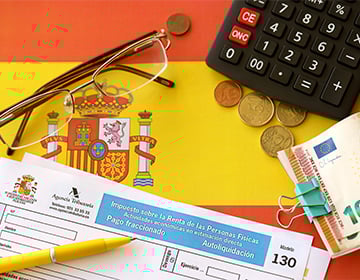 Buyers in Spain must pay the Property Transfer Tax (ITP) within a legal deadline after signing the title deed, usually 30 working days. Working days exclude weekends and public holidays, so buyers must calculate carefully. Missing this deadline triggers interest and penalties, which increase the longer the delay. In serious cases, delays over 12 months can lead to penalties of up to 20% of the tax due. Late payment also blocks the Land Registry from finalizing the property transfer. This means the buyer does not have full legal protection over the property and cannot resell it until the tax is properly settled.
Where ITP Is Paid in Spain
ITP is paid to the regional tax authority that governs the area where the property is located. Each autonomous community manages its own payments, either in person or through online portals. Modern systems allow buyers to pay electronically using a Digital Certificate, which issues a unique reference code. Banks acting as “collaborating entities” can also process the payment. The regional tax office then stamps the tax form as “Liquidated,” which confirms that the payment has been accepted.
Required Documentation for ITP Payment in Spain
To complete the ITP payment process, buyers must gather and submit the following documents:
- Copy of the notarized deed (escritura de compraventa)
- Completed Modelo 600 tax form
- Proof of payment (NRC code or bank receipt)
- Buyer’s NIE (Número de Identidad de Extranjero)
- Property’s cadastral reference and any additional regional forms required
Differences Between ITP and VAT in Spain
What is VAT in Spain?
New-build properties in Spain are subject to Value Added Tax (VAT), known locally as Impuesto sobre el Valor Añadido or IVA. This tax applies to the first transfer of a property from a developer to a buyer. Residential homes carry a national 10% rate of VAT in Spain, while commercial properties or land sold by a company are taxed at 21%. In the Canary Islands, the VAT equivalent, IGIC, is lower at 7%. VAT ensures that the government collects revenue directly from commercial developers during the initial sale of a property.
Key Differences Between ITP and VAT
| Feature | VAT (IVA) | ITP (Property Transfer Tax) |
| Property Type | New-build properties | Resale or second-hand homes |
| Government Authority | Central government | Regional authorities |
| Tax Rate | Standard nationally (10% residential, 21% commercial) | Varies by autonomous community (6%–13%) |
| Timing of Payment | At the moment of purchase | Within 30 working days after signing the deed |
| Stage of Ownership | First transfer from the developer | Subsequent transfers after the initial sale |
Which Tax Applies to Developers vs Private Sellers in Spain
Developers selling new homes must charge VAT because they are transferring property as part of a commercial activity. Private sellers, on the other hand, only collect ITP when selling resale properties. This makes ITP generally lower for buyers in regions with reduced rates, but the actual cost depends on location. Certain situations allow a resale transaction to switch from ITP to VAT, such as when both parties are VAT-registered companies and the property is for business use. In these cases, VAT on property purchase in Spain may be deducted later, but ITP cannot.
Additional Stamp Duty (AJD) for New Homes in Spain
New-build properties are also subject to an extra tax called Actos Jurídicos Documentados or AJD. AJD is a new property tax in Spain applied to the notarization of the deed and registration of the property. Rates range from 0.5% to 1.5% depending on the region. This tax adds to the total upfront cost of a new home, which often reaches 10.5% to 11,5% when combined with VAT on property sales in Spain. AJD is not applied to resale homes, so buyers of second-hand properties usually pay only ITP tax in Spain.
How to Calculate Property Transfer Tax (ITP) on Spanish Property
 The taxable base is the number used to calculate ITP, and it is the higher of the declared purchase price or the Valor de Referencia. The declared price is the amount the buyer pays the seller, as written in the deed. The Reference Value is an official figure set by the Cadastre based on local market data. This value is updated every year and can be higher than the negotiated price. Paying tax only on the lower purchase price can trigger a “Value Check” from the regional treasury. Buyers may then owe the difference, plus interest and fines, which makes accurate reporting essential.
Example Calculation Using a Typical Resale Property in Spain
The final ITP cost depends on the region and the taxable base. For a property with a taxable base of €250,000:
- In Madrid (6%): €250,000 × 0.06 = €15,000
- In Andalusia (7%): €250,000 × 0.07 = €17,500
- In Murcia (7.75%): €250,000 × 0.0775 = €19,375
- In Valencia (9%): €250,000 × 0.09 = €22,500
These examples show that the same property can have a difference of €7,500 in tax cost depending on location. Spain property transfer tax ITP rates in 2026 for autonomous communities significantly affect the total price, so buyers must plan for the highest possible ITP in their area.
Spain Property Transfer Tax Rates by Region in 2026
ITP in Catalonia (2025 – Progressive System)
The property tax in Barcelona and other areas in Catalonia uses a progressive ITP system for residential resale properties, which makes it one of Spain’s most expensive regions. Key points:
- First €600,000 of a property: 10% tax
- €600,001 to €900,000: 11% tax
- €900,001 to €1,500,000: 12% tax
- Above €1,500,000: 13% tax
- Large holders (more than 10 properties, or 5 in stressed areas): flat 20% rate on new acquisitions
- Young buyers under 35 or large families with income below €36,000: reduced 5% rate for their primary residence. It is a social incentive tied to personal circumstances (primary residence use, income caps, and other qualifying conditions)
ITP in Costa del Sol (Andalusia)
 Andalusia, including the Costa del Sol, offers one of the most buyer-friendly Spain property transfer tax rates in 2026. The flat ITP rate for second-hand residential properties is 7%, which makes cost planning simple. Historically, rates were progressive and could reach 10%, but the flat rate now benefits all buyers. Real estate investors may access a reduced 2% rate for properties under €500,000 intended for resale within two years. This low rate creates significant savings, particularly for high-value purchases in areas like Marbella or Estepona.
ITP in Costa Blanca (Alicante – Valencian Community)
Effective from June 1, 2026, the standard ITP rate for resale properties is now 9% for properties up to €1,000,000, while higher-value homes over €1 million are taxed at 11%. Alongside this, the Stamp Duty (AJD) on related deeds in the region has also been reduced from 1.5% to 1.4%. These deductions aim to support mid-market buyers while maintaining higher taxes on luxury properties. If there is a specific reduction that applies (such as for young buyers, large families, or people with disabilities purchasing a primary residence), the lower rate continues to apply. International buyers must budget carefully because the rate is higher than in neighboring Murcia or Andalusia.
ITP in Costa Cálida (Murcia)
Murcia offers a competitive tax environment with a general ITP rate of 7.75% as of July 2025, reduced from 8%. Stamp Duty (AJD) for new builds also fell from 2% to 1.5%, which makes new properties more affordable. Young buyers under 40 can benefit from a 5% ITP rate for their primary residence under certain conditions. These cuts, along with lower average property prices, make Costa Cálida attractive for first-time buyers and those seeking better value compared to Costa Blanca or Catalonia.
Summary Table of Regional ITP Structures (2025–2026)
| Region | General Rate | Primary Reform / Trend |
| Catalonia | 10%–13% | Progressive tax system; 20% rate applies to large property holders |
| Andalusia | 7% | Flat rate structure, generally investor-friendly |
| Valencia | < €1M: 9% | > €1M: 11% | Rate reduction effectve from June 1, 2026 |
| Murcia | 7.75% | Immediate rate cut implemented in 2025; AJD also reduced |
| Madrid | 6% | Long-standing, consistently low-tax environment |
Buying Property with Full Cost Transparency at TEKCE
TEKCE works directly in Catalonia, Costa del Sol, Costa Blanca, and Costa Cálida, so buyers have local support in key Spanish markets. Our team provides tax guidance, legal coordination, and full support throughout the purchase process. Whether you want to invest in a second home in Spain, or want to buy a resale property in Spain, understanding the full purchase cost before committing helps you avoid stress later. TEKCE provides clear cost breakdowns before any agreement is signed. Contact us to plan your purchase with full cost clarity!
★ If you found this content helpful, please add tekce.com to your Preferred Sources in Google.


 EN
EN 


