- Home
- Blog
- Market Analysis
- The Real Impact of Geopolitical Tensions on Dubai Real Estate Market


The Real Impact of Geopolitical Tensions on Dubai Real Estate Market
Following the recent geopolitical escalations in the Middle East, the Dubai real estate market has found itself at the center of intense speculation. Rumors of a sudden 20% crash in property prices have been circulating widely. Moreover, several headlines have been suggesting that Dubai has permanently lost its power and charm, and that it is no longer a safe place for expats or investors. However, a closer look at the data and the underlying market dynamics reveals a different reality.
It is true that the Dubai property stocks tumbled 20% in five days. However, the physical property market only experienced a decrease in transaction volume, not in property prices. Sector experts read this slowdown as a wait-and-see period rather than an actual crisis.
What is Really Happening in Dubai?
To understand the how the war affects Dubai property prices, it is essential to correct the catastrophic perception in the global landscape.
Özkan Yurdakul, Dubai Office Manager at TEKCE Real Estate, provides an insider’s perspective on the current situation:
“There is no war in Dubai. War is defined by mutual attacks and high-scale destruction, and this is not what is happening in the UAE. Instead, due to its geographical position, the country has found itself simply defending its airspace, and is not initiating counter attacks. Iconic buildings were not bombed: the reality is that the city's air defense systems successfully intercepted drones and missiles. While some shrapnel did fall and cause financial damage to specific locations, life continues in its normal course, and the primary focus of the government is the safety of its residents. Furthermore, Dubai airspace was never completely closed between February 28 and March 3. Although flight frequencies were lower than usual, airlines such as Emirates continued their operations, and passengers could safely return to their home countries.”
While commenting on the real estate market outlook, he further suggests that:
“As the real estate market is slow and steady, prices do not experience instant and sharp fluctuations like stock market indices. For significant price changes to occur, a large number of people must move in the same direction. Currently, the majority still firmly trusts the UAE and its government. In fact, neither developers nor individual property owners are reducing their prices because they know this situation is temporary. There are no panic sales, and contrary to expectations, Dubai property prices are not going to drop.”
Structural Resilience: 30 Years of Experience
The UAE has survived three major global events since the early 2000s. The Emirate learned critical lessons from the 2008, 2014, and 2020 crises and implemented stronger economic safety nets after each event. As a result, the real estate market grew significantly more mature and weathered each crisis more comfortably than the last.
Dubai’s current power is a direct result of its 30 years of meticulous planning. The government consistently invests in the welfare of its citizens and tourists. Long-term master projects (like those of 2032 and 2040) are specifically designed to ensure the city remains strong.
Dubai Real Estate Market Outlook: What Does the Data Show?
When we look at the Year-over-Year (YoY) data to understand the real impact of the geopolitical tension, DXBinteract figures reveal a clear picture; transaction volumes naturally slowed down, but property values remained remarkably resilient:
Period | Number of Transactions | Median Price |
|---|---|---|
Feb 16 - Mar 15 (2025) | 15,523 | AED 1,654,000 |
Feb 16 - Mar 15 (2026) | 14,138 | AED 1,638,000 |
YoY Change Impact | ▼ -8.9% (Slowdown) | ▼ -0.9% (Stable) |
To understand the anatomy of this slowdown, we must look beyond the monthly averages and examine the immediate reaction of the market during late February and early March.
Weekly Transaction Volume (Late Feb vs. Mid-March)
Time Period (Weekly) | Transaction Count (Approx.) |
|---|---|
Pre-Conflict Baseline | |
Initial Shock Drop | |
Immediate Recovery | |
Secondary Pause |
While the transaction volume dropped by 50% during the peak conflict week (starting March 2), this bottom level merely matched the standard transaction numbers regularly seen during the December holiday season. It was a natural, temporary pause as people tried to understand the situation.
We must also analyze the content of these sales. Even during the weeks when transaction volume dropped significantly, the composition of the sales remained identical to the record-breaking weeks: the market is still heavily dominated by off-plan projects (66% of all sales). This shows that investors are confident in Dubai’s continued growth.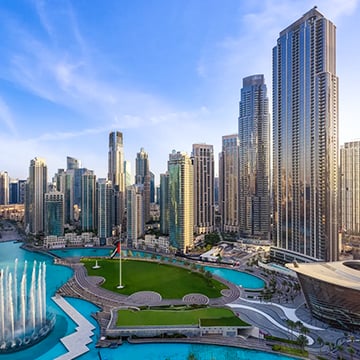
Meanwhile, high-net-worth capital did not exit the market. As DXBinteract data confirms, high-volume, ultra-luxury transactions worth tens of millions of dollars persisted without interruption. This is the clearest indicator that global capital still views Dubai as an irreplaceable safe haven, regardless of regional geopolitical fluctuations.
Investment Strategy and Market Opportunities
This current cooling-off period presents a rare window of opportunity for buyers. During normal market conditions, properties that are presented in online meetings are often sold before an investor can even make a final decision. Now, these properties are waiting for buyers who think long-term and want to make profitable investments.
Expecting deep discounts is an unrealistic strategy for a Dubai property prices forecast. Neither developers nor individual property owners are reducing their prices because they know this situation is temporary. If investors do not utilize this calm period, the market will soon return to its aggressive momentum. Therefore, the soundest move right now is to ignore the panic, focus on long-term gains, and take a secure position in the market before this window closes.
★ If you found this content helpful, please add tekce.com to your Preferred Sources in Google.


 EN
EN 


