- Home
- Blog
- Tips & Advice
- Best Countries to Start a Business Abroad or Expand Overseas


Best Countries to Start a Business Abroad or Expand Overseas
Starting a business abroad or expanding overseas is a big decision, but can be incredibly rewarding. It is especially compelling in today's world, where geographical borders matter less than ever and setting up operations internationally has never been more accessible. But choosing the right country is just as important as the decision to expand itself. This matters not only for tax implications, but for how successfully you build and sustain your business long-term.
Key Factors to Consider When Starting a Business Abroad
When setting up or expanding your business overseas, there are many things to evaluate, and what makes a country business-friendly isn't always obvious.
Ease of Company Formation: From the time it takes to register to minimum capital requirements, the ease of the process matters more than most founders anticipate. Whether online incorporation is available, how many steps the bureaucracy involves, and how long it realistically takes signal efficiency.
 Banking and Financial Infrastructure: One of the first practical hurdles you'll face, a functional banking system is essential from day one. Things like opening bank accounts as a foreign national, international transfer access, and available financing options can determine how smoothly your business operates, often more so than tax rates.
Stable Environment: Legal, political, and economic stability are all necessary foundations for a business's future and essential for protecting investments long-term.
Market Access: Beyond the domestic market, whether a country can serve as a gateway to larger regional or global markets is a significant advantage. Geographic location, trade agreements, and export infrastructure can significantly support or limit what’s possible.
Tax Implications and Structure: Incentives and rates both matter, but predictability is the real highlight. Transparent taxation, favorable treaties, and competitive corporate tax rates directly affect long-term profitability.
Talent Pool: Companies can move capital across borders far more easily than they can move talent. That's why the local skills pool, including education quality, available specializations, and workforce productivity, often matters more than founders initially expect.
Intellectual Property (IP) Protection: Effective IP protection is one of the biggest assurances a country can offer innovative businesses. What sets the best jurisdictions apart is not just having patent, trademark, and copyright protections, but the consistency of their enforcement.
Best Places to Start a Business Abroad
Finding the best country for your next venture isn't about which comes out on top overall. It's about which is the right fit for your specific goals and business model.
• Singapore
Starting a business in Singapore for foreigners is widely regarded as one of the smoothest experiences globally, thanks to its efficient setup process and minimal bureaucratic friction. Its location also places you within reach of major Southeast Asian markets, including China and Indonesia.
Cons: High operating costs and a small domestic market mean scaling locally has its limits.
• Switzerland
While not the cheapest place to operate, starting a business in Switzerland appeals to those prioritizing reputation, IP protection, and long-term stability. It is particularly well-suited for companies where trust and credibility are part of the product.
Cons: Beyond the high operating costs, regulatory complexity can slow things down.
• Ireland
Starting a business in Ireland means accessing the EU single market with an English-speaking workforce. It also holds the lowest corporate tax rate in Europe, making it a preferred location for many international headquarters.
Cons: Heavy dependence on international markets and rising business costs.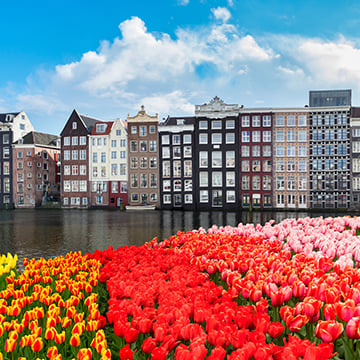
• Netherlands
Long serving as Europe's commercial gateway, the Netherlands is known for its exceptional transport infrastructure and strong startup ecosystem, making it a natural hub for businesses with regional ambitions.
Cons: Higher corporate tax rates compared to Ireland and labor shortages in some specialized sectors.
• Estonia
Estonia has pioneered the digital-first business environment, offering one of the most entrepreneur-friendly setups in the world. Its e-Residency program makes starting an online business abroad straightforward; register and run an EU-based company entirely remotely.
Cons: Small domestic market limits local growth potential.
• United Arab Emirates
The UAE offers one of the strongest combinations of tax efficiency and global connectivity, sitting at the crossroads of Europe, Asia, and Africa. Free zones allow 100% foreign ownership and a straightforward setup for international businesses.
Cons: Talent costs can run high, and free zone vs. mainland regulatory differences are worth understanding before you commit.
• Spain
Spain's business appeal goes beyond numbers; its quality of life attracts international talent in a way few other markets can match. Its large domestic market and EU membership make it a serious commercial base, not just a relocation destination.
Cons: Slower bureaucracy compared to more streamlined markets and notable regional variations in regulations.
• Turkey
Turkey's unique positioning between four different markets gives it a geographic advantage that few countries can claim. Combined with lower operating costs and a strong manufacturing base, it presents a compelling case for businesses looking to access multiple high-growth regions from a single base.
Cons: Exchange rate fluctuations and inflation are real considerations, particularly for businesses operating in Turkish lira.
Which Country is Best Based on Your Business Goals?
The best country for your business depends entirely on what you're optimizing for.
• For the fastest, simplest remote setup: Estonia, Singapore, UAE
• For a tax-efficient structure: UAE, Ireland, Estonia, Switzerland
• For EU market access: Ireland, Estonia, Spain, Netherlands
• For entering a high-growth market: Turkey, UAE, Singapore
• For access to strong tech talent: Singapore, Estonia, Spain, Turkey, UAE
• For lifestyle and business combined: Spain, UAE, Switzerland
Spain: the Gateway to Europe
 Spain has ranked 18th on Forbes' list of the best countries for business globally, and it's no surprise. While it may not be the easiest place to set up, the advantages it offers make it well worth the process.
One of the biggest draws is market access. Spain gives companies a direct gateway to the entire EU Single Market: clients, investors, supply chains, and cross-border opportunities across 27 countries.
Beyond market access, Spain consistently outranks many competitors when it comes to attracting international talent, thanks to its well-documented quality of life. Compared to Northern Europe, that talent also comes at a notably competitive cost.
The country's strongest opportunities lie in specific sectors:
- Tourism and Hospitality, it remains one of the world's leading destinations
- Technology and Startups, particularly in active and fast-growing hubs like Barcelona and Málaga
- Renewable Energy, one of Europe's strongest and most ambitious markets
Corporate tax sits at around 25%, higher than some competitors on this list, but qualifying new companies may benefit from reduced rates in early years. Spain is generally the right fit for founders seeking an EU base, digital entrepreneurs, and businesses in tourism or hospitality.
To learn more, check out our guide on starting a business in Spain for foreigners.
United Arab Emirates: Three Continents, One Base
 The UAE's appeal goes far beyond low taxes. It offers a strategic location, business-friendly regulation, and an international workforce that makes it one of the most genuinely global places to build a company.
One of the most significant advantages of starting a business in the UAE is ownership. Foreign investors can establish companies with full ownership, particularly within free zones, which also offer simplified setup procedures, industry-specific ecosystems, and potential tax advantages. For those looking to start a business in Dubai as a foreigner, a free zone is the natural starting point. Dubai's free zone to mainland expansion pathways also mean businesses aren't locked in as they grow.
The country's strongest sectors include:
- International Trade and Logistics, one of the most established and well-infrastructured sectors
- Technology and AI, backed by significant government initiatives and investment
- Real Estate and Investment, a consistently active and internationally recognized market
While corporate tax has been introduced in recent years, personal income remains untaxed, which is a meaningful advantage for founders and high earners. And from UAE, businesses can reach European, African, and South and Central Asian markets, making it a natural fit for trading companies, regional headquarters, and technology businesses.
Turkey: The Crossroads Advantage
Turkey has offered structural advantages for years, whether in location, talent, or manufacturing depth. But what distinguishes it most is its strategic position at the crossroads of multiple major markets. For businesses, Europe, the Gulf, Central Asia, and North Africa are all accessible from a single base.
 Starting a business in Turkey also means access to one of the region's largest domestic markets. Most investment-friendly jurisdictions on this list come with relatively small populations; Turkey's large consumer base opens up real commercial opportunities. A young and relatively skilled workforce is another draw, particularly in engineering and software development, where the talent-to-cost ratio is hard to match in Western markets.
Recent reforms and updated tax incentives have added to the case. Turkey’s 2026 investment incentives introduce meaningful benefits for businesses committing to the market, signaling a continued push to attract foreign capital and support the growing startup ecosystem.
The country's strongest sectors include:
- Manufacturing, one of the most established and competitive bases in the region
- Technology and Software, supported by government policy and active development programs
- Tourism and Health Tourism, a distinct and fast-growing combination that goes well beyond hospitality
The lira's volatility is real, but most international companies operating in Turkey transact in USD or EUR. Since operating expenses are largely in lira, this creates stronger margins and makes Turkey a genuinely cost-competitive base. Expanding here and investing in Turkish commercial properties is particularly well-suited for export manufacturers, regional headquarters, and SaaS companies.
Set Up or Expand Overseas with Professional Support
Figuring out the right country is one thing, executing it well is another. Every market has its own rules, and the details matter more than most founders expect.
That's where TEKCE Visa comes in. As part of the wider TEKCE group, TEKCE Visa provides legal support for establishing a company abroad, with on-the-ground expertise across Spain, the UAE, and Turkey.
★ If you found this content helpful, please add tekce.com to your Preferred Sources in Google.




 EN
EN 


