- Home
- Blog
- Legislation
- Your Rights After Obtaining Turkish Citizenship by Investment


Your Rights After Obtaining Turkish Citizenship by Investment
Holding a Turkish passport is a significant step that can transform your entire lifestyle, as well as that of your family. While many options are available, purchasing real estate is one of the most popular methods of how to obtain Turkish citizenship. However, a common concern among international investors remains: Is investment-based citizenship truly equal to Turkish citizenship by birth?
The answer is a definite yes. Under Turkish Constitutional Law, individuals who obtain citizenship by investment are granted all civil rights in Turkey, including the legal, social, and economic ones as those born in Turkey. These full rights of Turkish citizens don’t have an expiration date, and your children will benefit from the same rights as you do.
On this page, we are walking you through your legal rights after Turkish citizenship, including access to employment, the education system, healthcare, and inheritance protections.
Your Life After Turkish Citizenship by Investment
Obtaining a Turkish passport by investment grants you the exact same rights as a natural-born citizen. The benefits of Turkish citizenship are comprehensive. You have more than just residency rights in Turkey after citizenship; you get full civil rights, including the right to vote, hold public office, and access the state pension system.
Can I Hold Dual Citizenship in Turkey?
Yes. Citizens of many countries (including the USA, UK, Canada, Russia, and many EU nations) can hold Turkish citizenship without affecting their original status. Duel citizenship can be helpful in many ways, including mobility. One of the travel benefits of dual citizenship in Turkey is the ability to use two or more passports and enter numerous countries visa-free.
Important Note: Some countries (China, India, and Saudi Arabia) have strict laws prohibiting dual citizenship. We highly recommend verifying your home country's regulations before applying.
Mobility: Travel Rights of Turkish Citizens
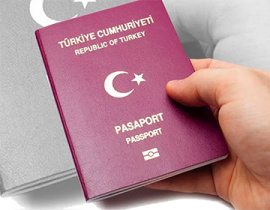
The Turkish passport benefits are one of the most attractive factors of citizenship. Holders of the standard "Burgundy Passport" can enjoy visa-free travel with a Turkish passport to over 100 countries without a prior visa.
Some of these countries that are visa-free for Turkish citizens include Japan, South Korea, Singapore, Qatar, Brazil, Argentina, Chile, Serbia, Montenegro, and Bosnia and Herzegovina. Additionally, you can obtain a visa-on-arrival in over 40 countries.
Furthermore, Turkey has an E-2 Treaty with the United States, which allows applicants to live, work, and open a business in the USA. This agreement makes Turkish citizenship a strategic alternative for investors from non-treaty countries like China, India, or Brazil.
Inheritance Rights of Turkish Citizens
If you are becoming a Turkish citizen through real estate investment, you are likely curious about the Turkish inheritance law for foreigners. The good news is that Turkey allows foreigners to obtain freehold ownership. Even if you don’t have a Turkish citizenship, you benefit from the same inheritance rights as Turkish citizens.
This means that all your assets are protected by the inheritance law in Turkey. Upon passing, your real estate, bank accounts, and shares do not revert to the government. They are automatically transferred to your legal heirs. If you want to manage the distribution of your assets, you also have the right to write a will.
Employment, Business, and Retirement in Turkey
 When you obtain citizenship, you gain more employment rights in Turkey. You can work, establish a business, and retire in Turkey without the bureaucratic processes applied to foreigners.
The most significant change is the elimination of the work permit requirement. Foreign nationals typically need to find a company to sponsor their work visa and renew it as required. Foreigners who obtain Turkish citizenship are completely free from this bureaucracy.
Normally, fields like law, pharmacy, dentistry, and notary services are reserved for Turkish citizens, and foreigners are not allowed to work in these fields. However, when you become a citizen, you gain the right to practice these professions, provided that you have an equivalent diploma.
Starting a business in Turkey as a citizen is also easier than as a foreigner. Technically, foreign nationals and Turkish citizens have the same rights regarding self-employment in Turkey. However, when you open a company in Turkey as a Turkish citizen, you typically go through a quicker bureaucratic process.
Furthermore, as a Turkish citizen, you benefit from the Social Security Institution (SGK) advantages. With a general health insurance, you and your family can access free healthcare services in state institutions. You can also receive a pension in the future if you decide to retire in Turkey.
Education Opportunities in Turkey
Turkey’s education system is based on equal opportunity, where primary and secondary education (until the end of the 12th grade) is compulsory and free of charge for everyone. This means that even if you are not a Turkish citizen, your child has the right to receive free education in Turkey.
However, public universities in Turkey are free only for Turkish citizens. Foreign nationals are required to pay tuition fees. While these fees are determined by the universities, they are much lower than in most European countries.
The most important point to consider is the language of instruction. Public schools in Turkey offer education in 100% Turkish. Additionally, extracurricular activities in these schools may be limited. However, you can find MEB-approved private schools and international schools across the country. All major cities also have international schools with English, Russian, German, or French as the language of instruction.
Taxation After Turkish Citizenship
Tax obligations of Turkish citizens and residents are based on residency status, not citizenship. Therefore, being a Turkish citizen does not automatically make you a tax resident.
The key criterion is the 183-day rule. If you reside in Turkey for more than 183 days within a calendar year, you are considered a tax resident, regardless of your citizenship. Therefore, even as a Turkish citizen, if you are not a tax resident, you do not pay taxes in Turkey on your global income. You would only be liable for income generated within Turkey (such as rental income).
If you are a tax resident, you can benefit from Double Taxation Avoidance Agreements. Turkey has tax treaties with more than 90 countries. These agreements ensure that you do not pay tax on the same income twice.
★ If you found this content helpful, please add tekce.com to your Preferred Sources in Google.


 EN
EN 


