


North Cyprus vs Spain: Cost of Living, Lifestyle, Residency & Property
Both North Cyprus and Spain attract international buyers looking for Mediterranean living, but daily life in the two places feels different. One is quieter and more cost-efficient; the other is more developed, internationally connected, and socially dynamic.
This guide compares them across the factors that actually shape a relocation decision: living costs, property prices and ownership, transport, residency, healthcare, and lifestyle.
Quick Answer: North Cyprus is the more affordable option, at roughly €700–€1,200 per month per person, compared with €1,200–€2,200 in Spain. Across our own portfolio in both countries, property in North Cyprus works out around 40% cheaper per square meter than in the Spanish coastal markets where we operate. Spain offers EU membership, stronger public infrastructure, and a far more developed transport network. North Cyprus suits buyers prioritizing cost and calm; Spain suits those prioritizing mobility, public services, and EU access.
Lifestyle in North Cyprus
The northern part of Cyprus has become popular among international buyers seeking a calm coastal lifestyle, relatively low living costs, and a slower pace. It is especially attractive to retirees, remote workers, and investors looking for seaside property.
Climate, Geography & Pace of Life in North Cyprus
North Cyprus has a typical Mediterranean climate: long, hot summers and mild winters, with sunshine through most of the year. This supports an outdoor-oriented lifestyle across most of the calendar.
The island's geography reinforces that rhythm. Coastal towns sit against mountain backdrops, and residential areas are generally low-density. With no large metropolitan centers, the pace of life is slower and more predictable than in mainland Europe, which is part of why the region is considered one of the best retirement-friendly destinations.
Transportation & Connectivity in North Cyprus
 Transport in North Cyprus is built around road networks and private vehicles. Public transport exists, mainly minibuses and shared taxis between towns, but it is neither as extensive nor as frequent as in larger European countries. Most residents drive. Note that traffic drives on the left, as it does across the whole island and in the UK, Ireland, and Malta.
For international travel, Ercan Airport is the main gateway, serving North Cyprus directly with connections primarily through Turkey, including Istanbul Airport and Sabiha Gökçen International Airport. Larnaca and Paphos International Airports in the south of the island offer a wider choice of direct European routes, though reaching them means crossing the Green Line. That is worth planning for, as rental car agreements and insurance policies may restrict crossings.
Daily life is car-dependent, but regional and international access is practical. If you are planning a visit first, our guide on reasons to choose North Cyprus for holidays covers the destination in more detail.
Language & Bureaucracy in North Cyprus
Turkish is the official language and dominant in government processes. English is a widely spoken language in North Cyprus, particularly in tourist areas and among professionals in real estate, hospitality, and education, a legacy of the island's British administrative history. In most day-to-day situations, you can manage in English.
Administrative procedures are generally straightforward but can move more slowly than in Western Europe. The system is manageable for foreigners, especially with local professional support.
Visa & Residence Permit in North Cyprus
North Cyprus visa policy is relatively flexible compared with EU countries. Short visits are straightforward for most nationalities, while longer stays require formal procedures that depend on your purpose and duration of stay.
For long-term plans, buying property and applying for a North Cyprus residence permit is a common route. The application involves submitting the correct documentation and complying with local regulations, and is generally regarded as less complex than Schengen-based systems.
Property Ownership and Title Deeds in North Cyprus
This is the part of a North Cyprus purchase that deserves the most attention, and it is where the market differs most from Spain.
North Cyprus is not a member of the European Union, and it is not internationally recognized as a state. In practical terms for a buyer, this affects three things: mortgage financing is capped at around 50% of the property value rather than the higher loan-to-value ratios common in EU markets, resale liquidity is narrower than in EU markets, and ownership does not carry EU residency or free-movement rights.
North Cyprus property is classified by its pre-1974 ownership status, and for years buyers were warned that some title deed categories carried more risk than others. That concern has largely been resolved. The Immovable Property Commission now settles historical ownership claims through restitution, exchange, or compensation, and the European Court of Human Rights recognized it as an effective remedy in 2010. Where a claim arises, the Commission handles the proceedings and the payout rather than the buyer. Checking which category a property falls into is still standard due diligence, but it is no longer the decisive risk it was once treated as. You can read our detailed article titled “Is it safe to buy property in North Cyprus?”.
North Cyprus real estate market is active and well established, but it does make independent legal review non-negotiable. TEKCE works with in-house legal counsel on every transaction and can arrange a title search before you commit to a purchase.
Cost of Living & Property Prices in North Cyprus
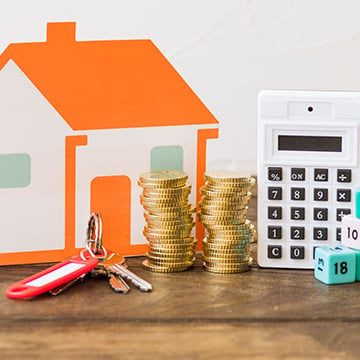 Affordability is the region's strongest advantage. Groceries, dining, and everyday services are generally cheaper than in most of Western Europe, and property prices per square meter run meaningfully below Spain's coastal markets.
Across our own North Cyprus portfolio, the median works out at roughly €2,600 per square meter, with most stock falling between €2,100 and €3,300. Girne is the most expensive area at around €2,800, followed by İskele and Gazimağusa at roughly €2,600, while Lefke is the most affordable at around €2,200.
One exception is worth knowing about: utilities are not cheaper. The island runs on an imported-fuel grid, and heavy summer air-conditioning use pushes electricity bills up, so monthly utility costs land close to Spanish levels.
For a fuller breakdown, see our guide on cost of living in North Cyprus, or the comparison table further down this page.
Lifestyle in Spain
Compared with North Cyprus, Spain offers more extensive public infrastructure, a larger urban network, and broader cultural and transport options. It is one of the most established expat destinations in Europe.
Climate, Geography & Pace of Life in Spain
 Spain has one of the most varied climates in Europe. Southern regions such as Andalusia are warm and sunny for most of the year, while northern areas like Galicia are cooler and greener.
Daily life follows a relaxed Mediterranean rhythm in coastal and smaller cities, while Madrid, Barcelona, and other urban centers run faster and more structured. Spain is also recognized as one of the top sustainable destinations to live.
Transportation & Connectivity in Spain
Spain's public transport is among the most advanced in Europe. High-speed rail, extensive metro networks, and well-connected airports make domestic and international travel straightforward. Madrid, Barcelona, Valencia, Málaga, and Alicante are strongly interconnected, and regional mobility is efficient, a significant draw for digital nomads and professionals who travel often.
Smaller inland towns are less well served, and a car is still useful outside the main corridors.
Language & Bureaucracy in Spain
Spanish, or Castilian, is the official language nationwide. Catalan, Basque, Galician, and Valencian hold co-official status in their respective autonomous communities; these are distinct languages, not regional accents. English is common in major tourism and international business areas, though proficiency varies by region and age group.
In expat destinations such as Málaga and Alicante, English is widely used in real estate, tourism, hospitality, and international business, which is part of why these cities rank among the best places for expats to live in Spain.
Spanish bureaucracy is more structured and formal than North Cyprus's. The legal framework is clearer, but procedures typically require more detailed documentation.
Visa & Residence Permit in Spain
Spain operates under EU and Schengen regulations, so its visa system is more structured than North Cyprus's and often more demanding for non-EU citizens. Whether you need a visa depends on your nationality, length of stay, and purpose of travel, as short-term Schengen visits follow different rules from long-term residence applications.
 Long-stay routes include the digital nomad visa, the non-lucrative visa (the usual retirement route), and work permits. Each carries its own financial thresholds and documentation requirements. Spain's property-linked Golden Visa ended in April 2025, so buying a home no longer creates a residence entitlement on its own.
The system is stable and well defined, but it requires more planning and compliance than North Cyprus residency pathways. Assess eligibility early and match the visa route to your long-term plans.
Cost of Living & Property Prices in Spain
Spain's cost of living varies significantly by region and is generally higher than North Cyprus's. Madrid and Barcelona are the most expensive, while smaller coastal towns and inland regions are considerably more affordable.
Property prices vary just as widely. Spain's national average sits at roughly €2,350 per square meter, but that figure includes inland and rural regions. In the coastal markets where most international buyers actually look, prices run well above it. Across our own Spanish portfolio, the median is around €4,500 per square meter, with most stock between €3,500 and €6,200. Málaga and the Costa del Sol are the most expensive at roughly €5,800, while Alicante and the Costa Blanca average around €3,900 and Murcia around €3,500.
The market is well developed, with everything from modern apartments to luxury villas, and the Balearic Islands and prime city centers command the highest prices of all.
Healthcare in North Cyprus vs Spain
Healthcare matters also for retirees or any expat who would like to relocate, and the two systems work differently.
Spain's public healthcare system is regarded as one of Europe's best, particularly for long-term treatment and elderly care. Access depends on residence status: eligible EU/EEA pensioners can register an S1 form, while non-EU retirees on a non-lucrative visa must hold private health insurance. Public waiting times for non-urgent appointments can be long, and many international residents carry private cover for faster access and multilingual service.
North Cyprus has both public and private facilities, and most foreign residents use private hospitals and clinics. Costs are considerably lower than in Western Europe, and standards in the main private hospitals are good. For complex or specialist procedures, some residents travel to Turkey, where a wider range of specialist care is available at similar or lower cost. Comprehensive private insurance is strongly recommended, as public provision for foreign residents is limited.
Purchase Costs Beyond the Price Tag
The headline price is not the total cost in either market, and the gap between the two is narrower than the property prices suggest.
In North Cyprus, budget 8–20% on top of the property price. The largest single item is the title deed conveyance tax, which since 15 May 2025 stands at 9% of the property value for foreign buyers. New-build purchases add 5% VAT, while resale property is VAT-exempt.
In Spain, budget 9–14% of the sale price. New-build carries 10% VAT, while resale property is subject to transfer tax (ITP) of 7–10% depending on the autonomous region, with stamp duty (AJD) of 1.2–1.5% applying to new-build and mortgage-financed purchases.
 Which market costs more depends on what you buy. A resale purchase sits near the bottom of both ranges. A new-build purchase in North Cyprus, where 5% VAT stacks on top of the 9% transfer tax, sits at the higher end and can exceed the equivalent Spanish cost. So while property is meaningfully cheaper per square meter in North Cyprus, transaction costs are not, and the two markets end up closer than the headline prices imply.
Annual holding costs run the other way, and the difference is substantial. North Cyprus charges property tax at £0.2 per square meter, so a 100 m² apartment costs roughly £20 a year. Spain's IBI is calculated as 0.4–1.1% of cadastral value, which typically puts an equivalent property in the hundreds of euros annually, before waste tax and community fees.
Financing differs as well. In North Cyprus, mortgages are available up to 50% of the property value, so buyers typically need a larger cash deposit than in Spain, where lending to non-residents is routine even though loan-to-value limits are lower than for residents. Spain’s more developed and deeper financial system also makes mortgage financing more accessible.
Full itemized breakdowns, covering legal fees, notary charges, utility connection costs, and mortgage expenses, are on our dedicated North Cyprus purchase costs and Spain purchase costs pages. Spain's wider tax picture, including rental income and capital gains, is covered in our Spanish tax system guide.
One practical note: North Cyprus costs are quoted in pounds sterling while property prices are usually listed in euros, so your final total moves with the exchange rate.
North Cyprus vs Spain: Cost of Living Comparison Table
Comparing everyday expenses side by side makes the difference clearer. Living-cost ranges reflect data from Numbeo and comparable public sources as of mid-2026. The property figures come from our own listings in both countries, covering +1000 properties in North Cyprus and +2000 in Spain.
Category | North Cyprus | Spain |
Monthly Total Living Cost per Person | €700 – €1,200 | €1,200 – €2,200 |
Monthly Grocery Expenses | €200 – €350 | €250 – €450 |
Mid-Range Dining per Person per Meal | €8 – €15 | €12 – €25 |
Utilities (Electricity, Water, Internet) | €140 – €270 | €120 – €220 |
Monthly Local Transport | €40 – €100 | €60 – €150 |
Monthly Rent per 1-Bedroom Apartments | €350 – €700 | €700 – €1,400 |
Monthly Rent per 2-Bedroom Apartments | €500 – €1,000 | €1,000 – €2,000 |
Property Price per m² in Our Portfolio | €2,100 – €3,300 (median €2,600) | €3,500 – €6,200 (median €4,500) |
Luxury Properties per m² in Our Portfolio | €4,400 – €12,900 | €8,500 – €22,000+ |
Purchase Costs on Top of Price | 8 – 20% | 9 – 14% |
Annual Property Tax | £0.2 per m² (~£20 for 100 m²) | 0.4 – 1.1% of cadastral value |
Note: the property rows reflect the coastal markets where we operate, not national averages. Spain's national average is closer to €2,350 per square meter because it includes inland and rural regions, while our Spanish portfolio is concentrated in coastal areas. North Cyprus prices are often quoted or paid in different currencies depending on the category, so euro equivalents shift with exchange rates. Utilities are the one everyday category where North Cyprus is not cheaper, because the island runs on an imported-fuel grid and summer air-conditioning use is heavy.
Which Lifestyle Fits You Best?
North Cyprus offers a quieter, more affordable, simpler lifestyle. It suits you if you want calm coastal living, lower daily expenses, flexible residency options, and more property for your budget, provided you go in with clear legal advice on title.
Spain offers a more structured European lifestyle with stronger infrastructure, highly rated healthcare, and a wider range of cultural opportunities. It is the better fit if you value mobility, EU access, public services, and a more developed urban environment, and have room in the budget.
Explore Properties in Both Markets
TEKCE Real Estate operates physical offices in both North Cyprus and Spain, so we compare these two markets from direct, on-the-ground experience rather than data alone, including title checks in North Cyprus through our in-house legal team.
Contact us to discuss which market fits your plans, and we will prepare a shortlist with full cost breakdowns for both.
Frequently Asked Questions
Is North Cyprus cheaper than Spain?Yes. Monthly living costs run roughly €700–€1,200 per person in North Cyprus against €1,200–€2,200 in Spain. On property, our own listings show a median of about €2,600 per square meter in North Cyprus against €4,500 in the Spanish coastal markets we cover, so roughly 40% cheaper. Utilities and purchase costs are the exceptions, where the two are comparable.
Do you need a visa for North Cyprus?Short visits are straightforward for most nationalities. Longer stays require a residence permit, and the procedure depends on your purpose and duration of stay. Buying property is a common basis for a residence permit application.
Do I need a visa for Spain?It depends on your nationality, length of stay, and purpose of travel. EU citizens do not. Non-EU nationals may enter short-term under Schengen rules, while staying longer requires a specific residence route such as the non-lucrative or digital nomad visa.
What language is spoken in North Cyprus?Turkish is the official language. English is widely spoken in tourist areas and in real estate, hospitality, and education, so most daily affairs can be handled in English.
Is North Cyprus in the European Union?No. North Cyprus is outside the EU and is not internationally recognized as a state. This caps mortgage financing at around 50% of value and means property ownership does not carry EU residency or free-movement rights.
How much are purchase costs in each country?Budget 8–20% on top of the price in North Cyprus and 9–14% in Spain. New-build in North Cyprus sits at the top of its range because 5% VAT stacks on the 9% title deed transfer tax, so it can cost more in total than an equivalent Spanish purchase. Our North Cyprus and Spain purchase cost pages have the full item-by-item breakdown.
Which is better for retirement, North Cyprus or Spain?Spain, if healthcare quality and EU access are your priorities. North Cyprus, if lower costs and a quieter pace matter more. Retirees who need regular specialist care generally find Spain's system easier to rely on.
★ If you found this content helpful, please add tekce.com to your Preferred Sources in Google.





 EN
EN 


